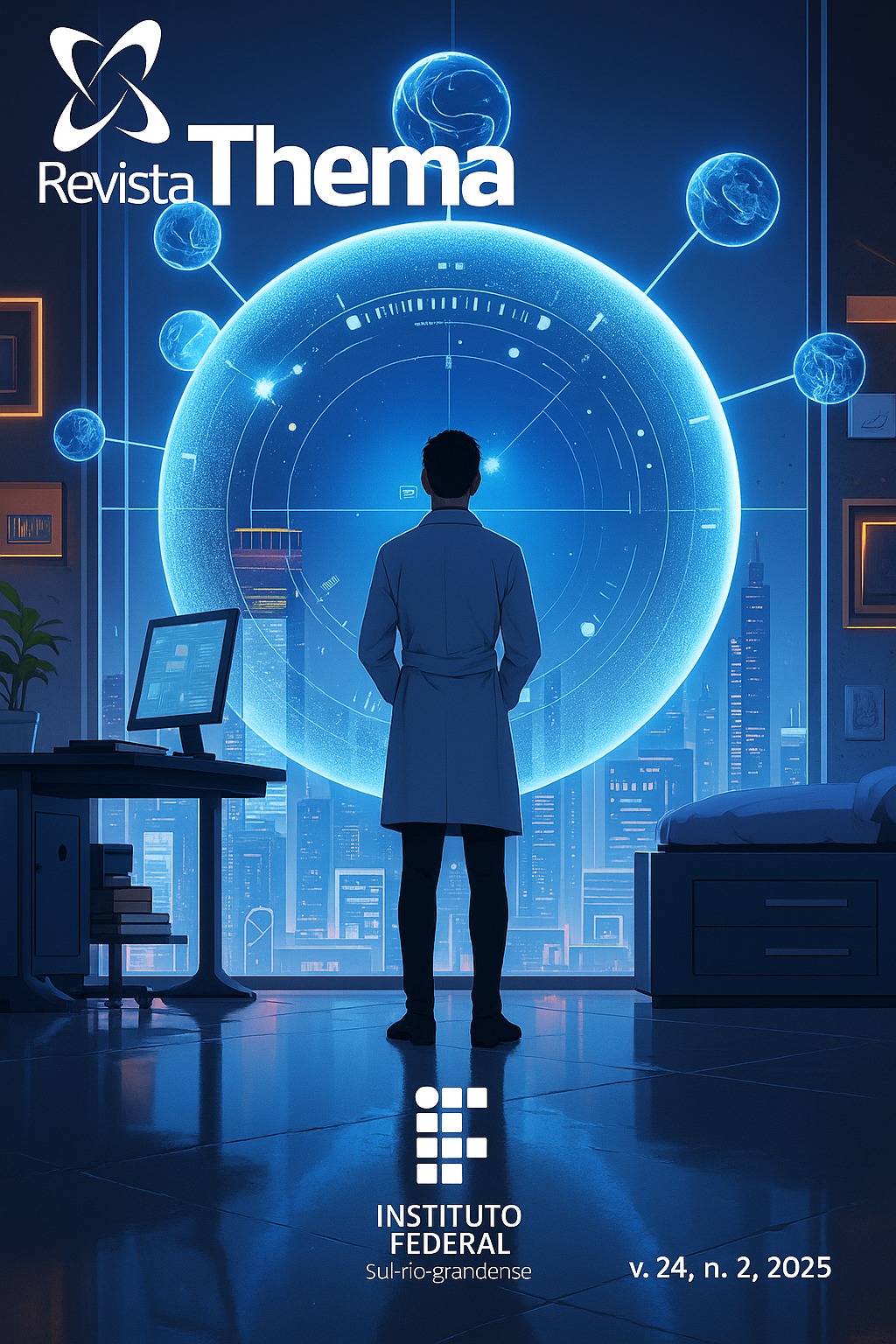
The relationship between the imaginary about Science and scientists in the conceptions of elementary school students
DOI:
https://doi.org/10.15536/revistathema.24.2025.3977Keywords:
Science teaching, Perception of science, Scientific imagination, Elementary educationAbstract
This study aimed to analyze students' conceptions of science as a body of knowledge and their imagery of scientists. It used a qualitative approach, in which 85 sixth- and seventh-grade elementary school students from a school in the northwest region of the state of Rio Grande do Sul (RS) responded to a questionnaire with two questions: one discursive, about the concept of science, and the other objective, about the imagery of scientists. Through thematic content analysis of the open-ended question about the concept of science, the responses were divided into three thematic categories: - Science related to everyday life, with 21 Context Units (CUs); - Science content, with 15 CUs; - Subjects related to science, with 6 CUs. It was found that the students were able to relate science as a school subject, connecting it to other subjects and to their daily lives. It was possible to perceive that the students' conception of the scientist's imaginary is linked to the scientific stereotypes propagated by the media and during classes.
Downloads
Downloads
Published
How to Cite
Issue
Section
License
O autor responsável pela submissão representa todos os autores do trabalho e, ao enviar o artigo para a revista, está garantindo que tem a permissão de todos para fazê-lo. Da mesma forma, assegura que o artigo não viola direitos autorais e que não há plágio no trabalho. A revista não se responsabiliza pelas opiniões emitidas.
A Revista Thema é de acesso aberto (Open Access), sem que haja a necessidade de pagamentos de taxas, seja para submissão ou processamento dos artigos. A revista adota a definição da Budapest Open Access Initiative (BOAI), ou seja, os usuários possuem o direito de ler, baixar, copiar, distribuir, imprimir, buscar e fazer links diretos para os textos completos dos artigos nela publicados.
Todos os artigos são publicados com a licença Creative Commons Atribuição-NãoComercial 4.0 Internacional. Os autores mantém os direitos autorais sobre suas produções, devendo ser contatados diretamente se houver interesse em uso comercial dos trabalhos.